
Kay Banbou
Kenscoff, Haiti, 2016-2017
Located at the Wynne Farm in Kenscoff, Haiti, this project is a prototypical bamboo structure, which served as a first step towards a bamboo core house project.
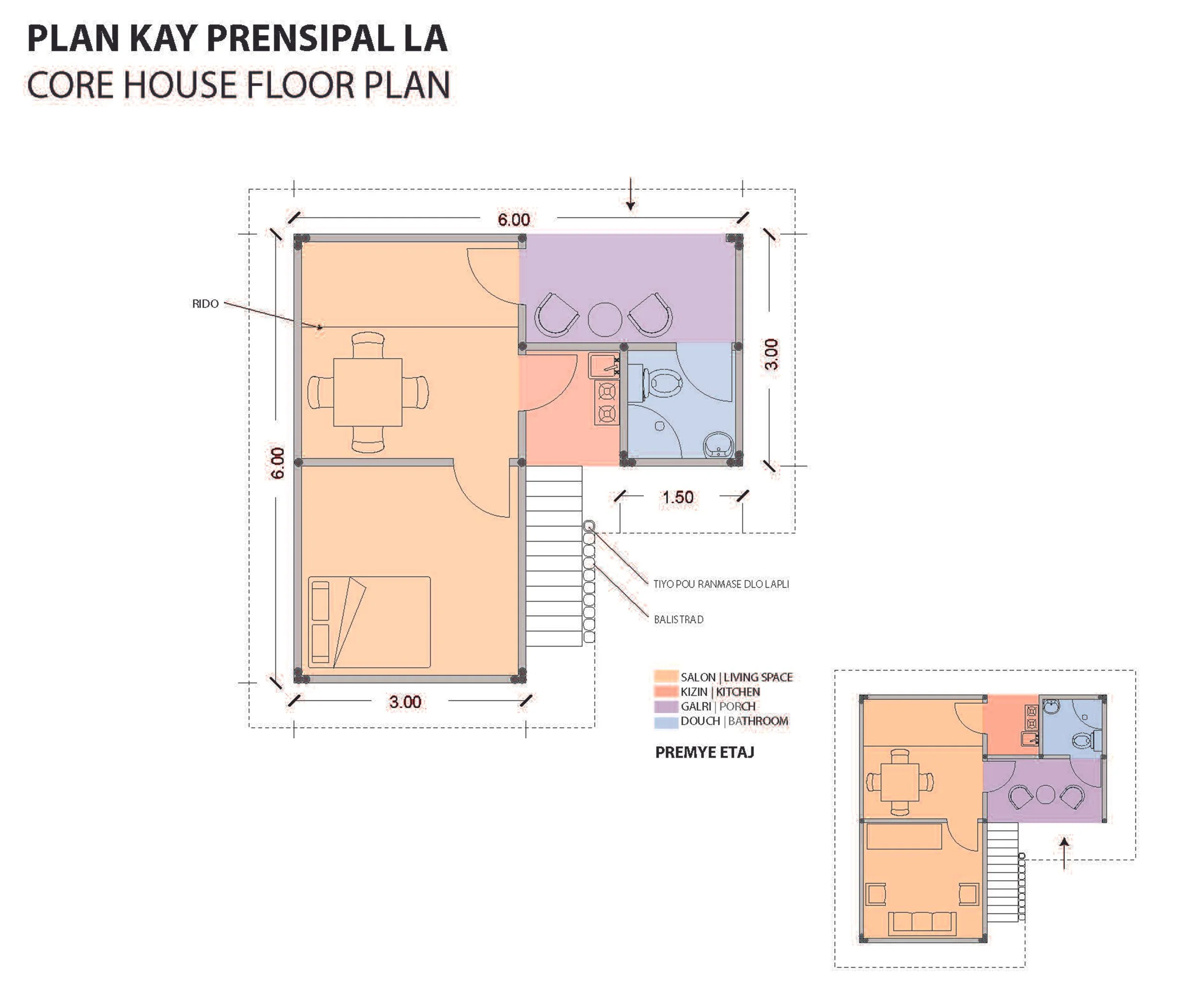
The Kay Banbou Project by was developed within the 2016 iteration of the Architectural Association Visiting School programme in Haiti. Conducted between July 2016 and March 2017, the project explored the design and construction of a low-cost, resilient bamboo ‘core house’—a prototype dwelling that demonstrates the potential of bamboo as a sustainable structural material for the Haitian context. The programme combined design education, digital fabrication techniques, and hands-on construction for a lightweight, affordable, and environmentally responsive housing system which could lead as an example.
Over thirteen intensive days in the summer of 2016, six tutors and eighteen students from Haiti and around the world collaborated to design a 25 sqm bamboo house intended for self-construction by local families at a cost of under USD 7,700. The design brief required the dwelling to serve as a basic one- or two-room home with the flexibility to expand as a family’s means improved. Emphasis was placed on affordability, replicability, and cultural resonance—key criteria for the adoption of bamboo as a viable building material in Haiti.
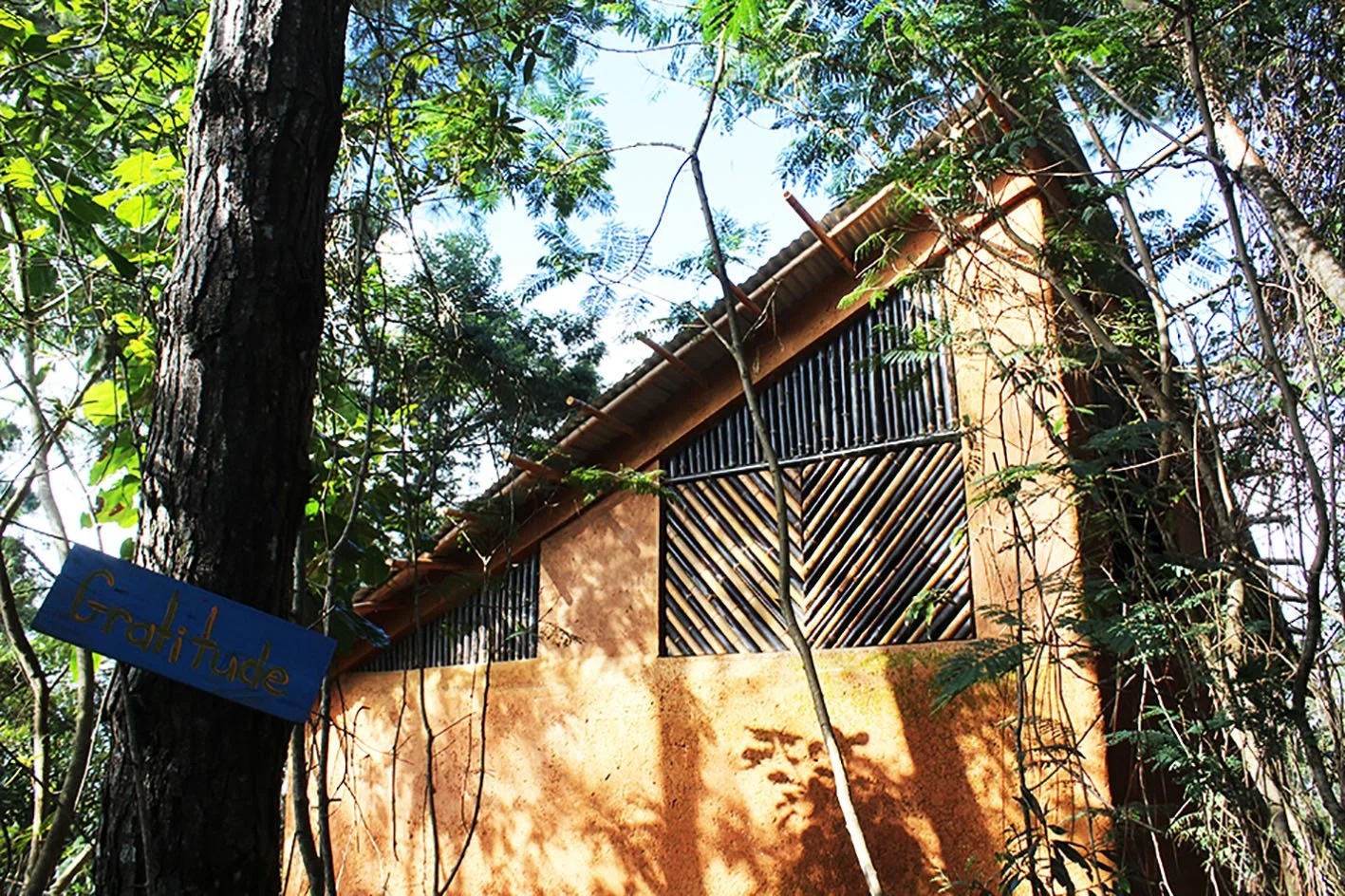
From six group proposals, one winning scheme—Vwaznaj se Fanmniy—was selected for realisation. The built prototype, constructed between October 2016 and March 2017 in Kenscoff (south of Port-au-Prince), integrates the structural logic of the winning project with a parabolic roof adapted from another proposal Kay Identite. The rotated roof form increases usable space on a potential upper level, promotes natural ventilation, and allows for efficient rainwater collection at two points without guttering. Constructed on nine reinforced concrete footings, the 27 sqm bamboo structure is sheltered by a 48 sqm roof canopy rising to 5 m at its highest point.
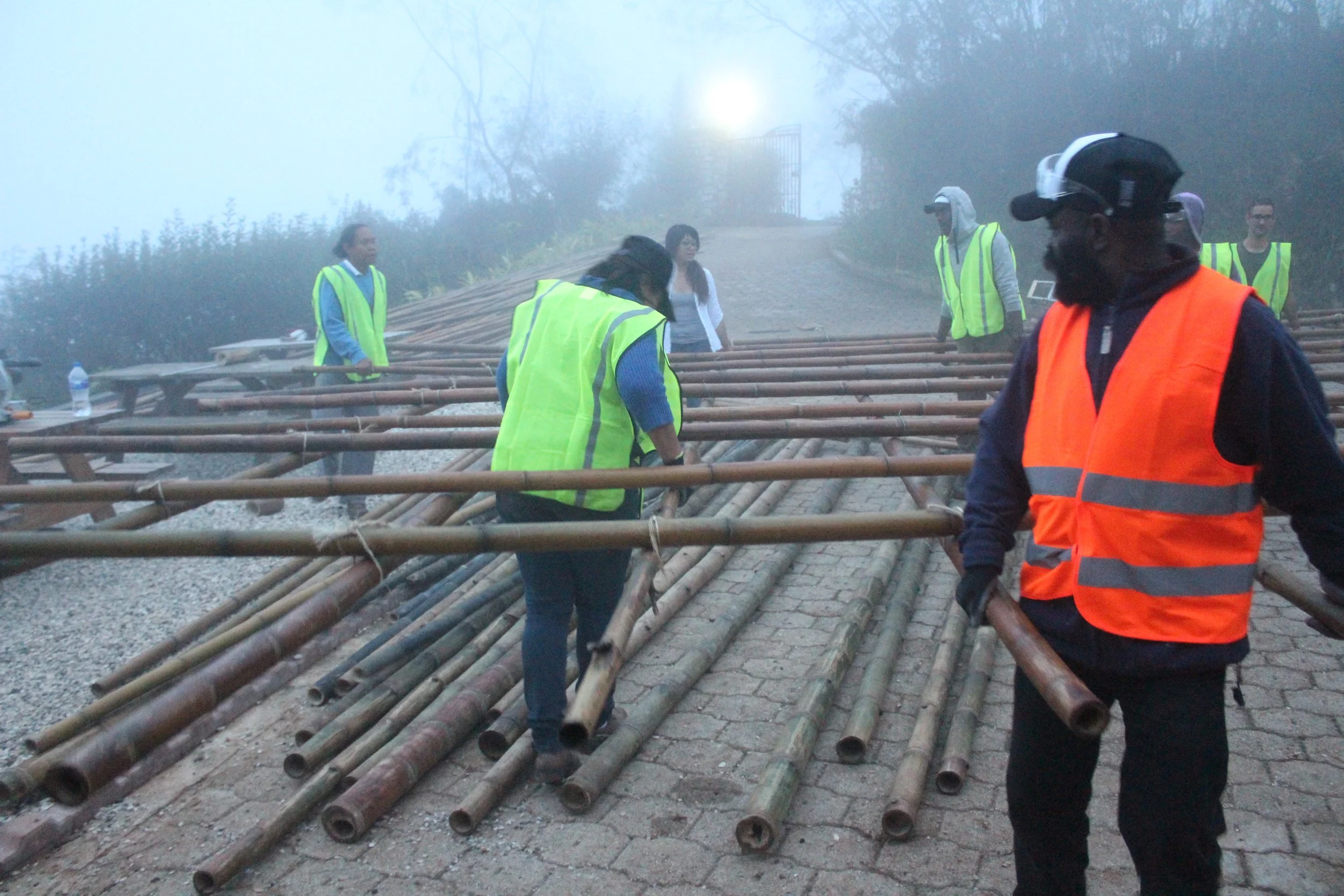
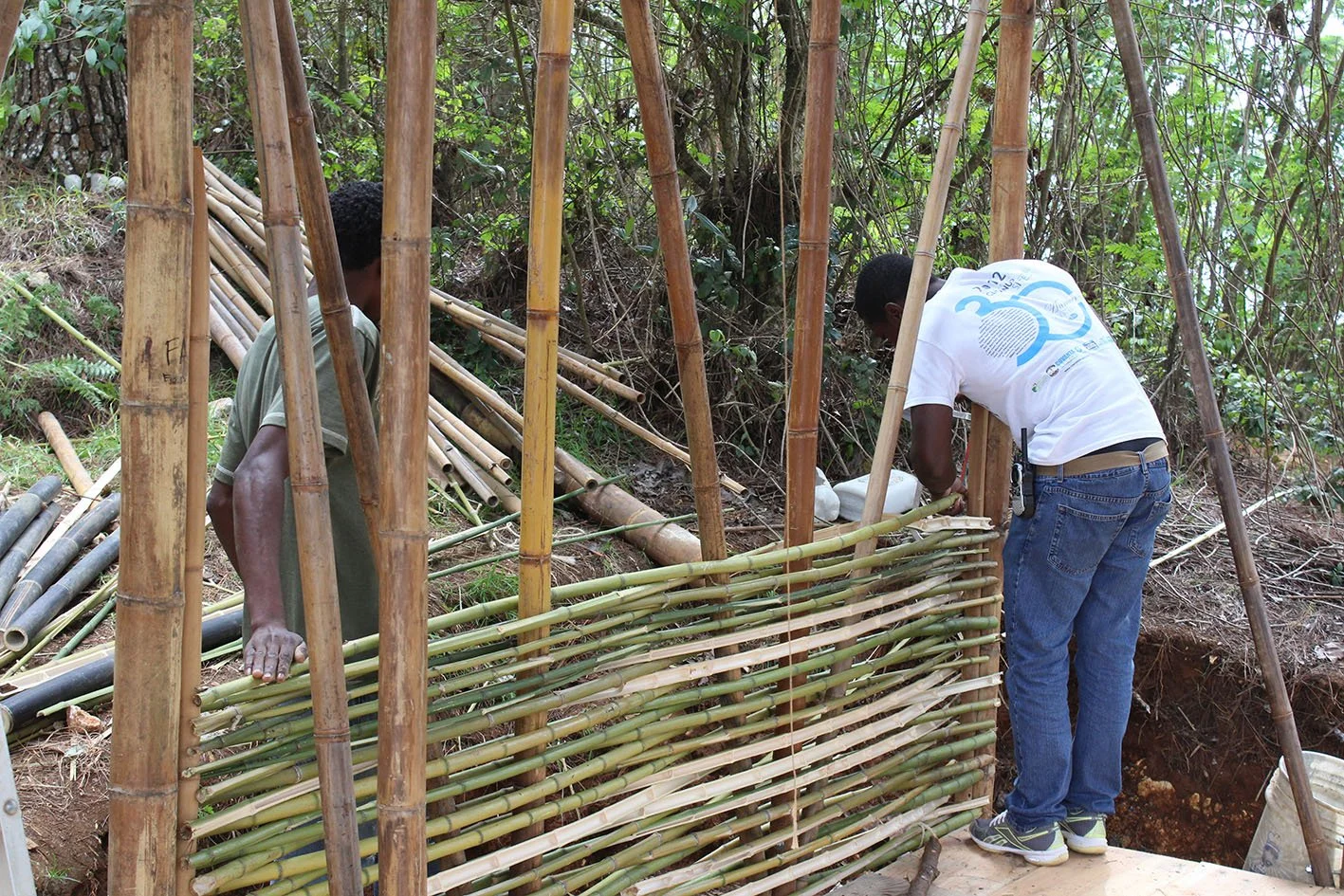
The structural system uses locally available species—Guadua angustifolia, Phyllostachys makinoi, Phyllostachys aurea, and Bambusa lako—with all but the guadua harvested within a 1 km radius from local farms. Approximately 30 Guadua, 120 Makinoi, 40 Lako, and 600 Aurea were employed, assembled with locally sourced construction materials and tools to ensure replicability using Haiti’s current infrastructure without parachuting in solutions. Walls employ a bamboo bahareque infill technique with adobe from the red clay excavated for the foundations.
Design development combined physical modelling with advanced computational tools, including Rhinoceros, Grasshopper, CFD analysis, and finite element testing. This process optimised the structure and demonstrated the value of digital tools to adjust the design to onsite practicalities and provide cut lengths for the bamboo.
Local carpenters were trained to build with bamboo with local engagement invited to change local attitudes to bamboo, with over 200 community members participated during construction.
Project Information
Covered Area: 27 m² (36 m² including galri)
Function: Prototype “core” family house
Height: 5 m
Location: Kenscoff, Haiti
Lead: John Osmond Naylor
Construction Manager: Doria Reyes Cordova
Senior carpenters: La Guerre Fedeme and Barlande Narcisse (Ti Coq)
Collaborators: Architectural Association Visiting School, Wynne Farm Ecological Reserve, FOKAL, UCLBP, and British Embassy Port au Prince